
The short answer
Most windows that crack "by themselves" have a thermal stress crack. When the middle of a pane heats up in the sun while the edges stay cool inside the frame, the glass expands unevenly and can crack from the edge. Partial shade, dark blinds pushed against the glass, heaters blowing on it, and small chips on the edge all raise the odds. A cracked pane will not heal and usually spreads, so plan on new glass. In most cases the frame can stay.
We get this call a lot during the first cold mornings of fall and the first heat waves of summer. Someone walks into the living room and finds a crack across a window nobody touched. It is not your imagination, and it usually is not a problem with the house. It is physics.
What a thermal stress crack looks like
- It starts at the edge. The crack usually begins at the edge of the glass, close to a right angle with the frame, then wanders across the pane in a long curve.
- There is no impact point. A rock or a ball leaves a small chip with cracks spreading out like a star or a spider web. A thermal crack has none of that.
- It shows up on sunny glass. Big picture windows and the lower panes of sliding doors are common spots.
- On dual pane windows, often only one pane cracks. The other pane can be perfectly fine.
Why glass cracks from heat
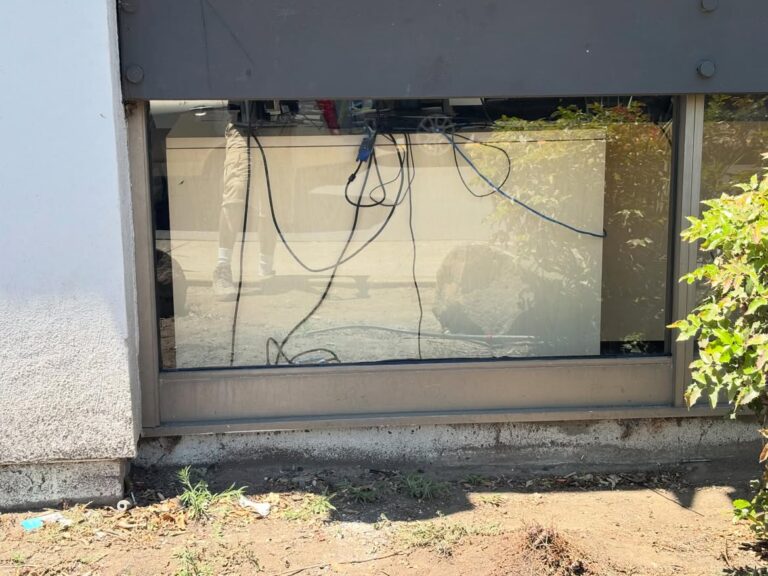
Glass expands as it warms up. The part of the pane you can see heats up in the sun, but the edges are tucked inside the frame and stay cooler. That difference pulls on the edge of the glass. If the difference gets big enough, or the edge already has a tiny chip from an old install or years of use, the glass gives way.
Sacramento sets this up well: cool mornings, strong afternoon sun, and big swings between the two. Fall and spring, when nights are cold and afternoons are bright, are prime time.
Things that make it more likely
- Partial shade. A tree, an awning or a roof overhang that shades half the glass creates a hot zone and a cool zone on the same pane.
- Blinds, curtains or furniture right against the glass. Dark blinds especially trap heat between themselves and the window.
- Window film that is not rated for your glass. Film makers publish which glass types their products are safe on, and older dual pane units are the most sensitive.
- Heaters and vents. A space heater or a heat or AC vent blowing straight onto the glass.
- Edge damage. Chips along the edge, often from a past install or a frame that shifted over time.
- Large panes of regular glass. Tempered glass handles temperature changes far better than standard annealed glass.
A cracked pane will not get better on its own. Temperature swings keep working on it, and most cracks grow.
Is it dangerous?
A single thermal crack often holds together for a while, but the glass is weaker and can break if it gets bumped, slammed or pushed by wind. On a dual pane window, a crack can also let the seal fail, which leads to fog between the panes. Put clear tape over the crack on the inside if it is spreading, keep kids and pets back, and have it looked at. If the cracked glass is in a door or close to the floor, treat it as urgent and read what to do right after a window breaks.
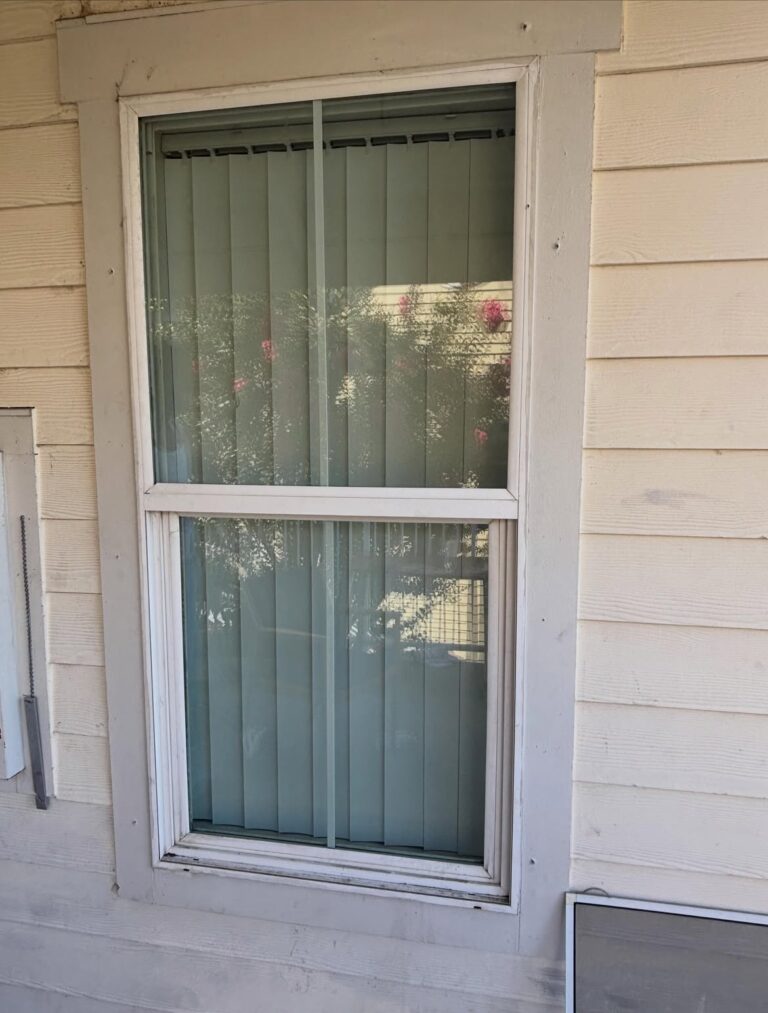
Most cracked panes can be replaced without touching the frame.
Send us a photo. We will tell you if it looks like thermal stress and what it takes to replace the glass.
How to fix it, and keep it from happening again
The fix is new glass. If the frame is solid, we replace just the pane or the dual pane unit, not the whole window. Here is how glass-only replacement works. For a window that keeps taking heat, like a big west facing picture window or a pane next to a heater, ask about tempered glass or a Low-E unit, which handle heat better.
- Leave a few inches of space between blinds or heavy curtains and the glass.
- Point heaters and vents away from windows.
- Check that any window film is approved for your type of glass before it goes on.
- Have chipped edges looked at the next time you have glass work done.
Wondering whether insurance covers it? That depends on your policy and what caused the crack. Here is who pays for a broken window.
Quick answers
Can a window crack from the cold?
Yes. A cold morning followed by strong sun, or a heater blowing on cold glass, creates the same uneven temperatures that cause thermal stress cracks.
Was my window installed wrong?
Not necessarily. Edge damage from an old install can make glass more likely to crack, but thermal cracks also happen to windows that were installed well.
Do I need a whole new window?
Usually not. If the frame and seals are in good shape, we replace only the glass.
Can I wait to fix a cracked window?
If the crack is small and the glass is not in a door or near the floor, a short wait is usually fine. Cracks tend to grow, so do not leave it for months.