
The short answer
Look at how the door is built and mounted, not just the design. You want a welded steel frame, hinges with pins that cannot be pulled from outside, solid mounting into the door jamb, a quality deadbolt that opens from inside without a key, and mesh that suits your pets and your view. If you want a pet door, keep it well away from the lock.
Most security doors look about the same in a showroom photo. The differences that matter are in the parts you do not notice until someone tests them: the corners of the frame, the hinges, what the door is screwed into and the lock.
1. The frame
A security door is only as strong as its frame. Look for welded steel corners rather than corners held together with screws or brackets, which can be pried apart. A heavier gauge steel frame flexes less when someone pulls on it. Ask what the frame is made of and how the corners are joined. A good installer will tell you straight.
2. What it is mounted to
This is the part people skip. The strongest door in the world does nothing if the mounting frame is screwed into stucco or thin trim. It needs to be fastened solidly into the house's door framing, with long screws into wood, not just the surface. Ask how the door will be anchored.
3. Hinges
Most security doors swing out, which puts the hinges on the outside. If the hinge pins can be tapped out, the door can be lifted off. Look for security or non-removable hinge pins and at least three hinges on a full height door.
4. The lock, and getting out in a fire
A quality deadbolt plus a latch is the baseline. The important part is the inside: California's residential building code requires the main exit doors of a home to open from the inside without a key or special knowledge. A double keyed lock on your front security door means that in a fire, someone has to find the key in the dark. Choose a lock with a thumb turn inside, and if you are worried about someone reaching through to the thumb turn, ask about a lock guard or tighter mesh around the lock area rather than a keyed inside cylinder.
A security door should keep people out, not keep your family in. Make sure it opens from inside without a key.
5. The mesh behind the bars
- Standard screen behind decorative bars: lets in air and keeps bugs out, but can be cut.
- Perforated steel or stainless mesh: much harder to cut or reach through, and holds up better against claws.
Heavier mesh gives a little less view. If you have a dog that throws itself at the door every time the mail comes, go heavier.
We measure your opening, build to fit, and anchor it into solid framing. Pet door options available.
6. Pet doors
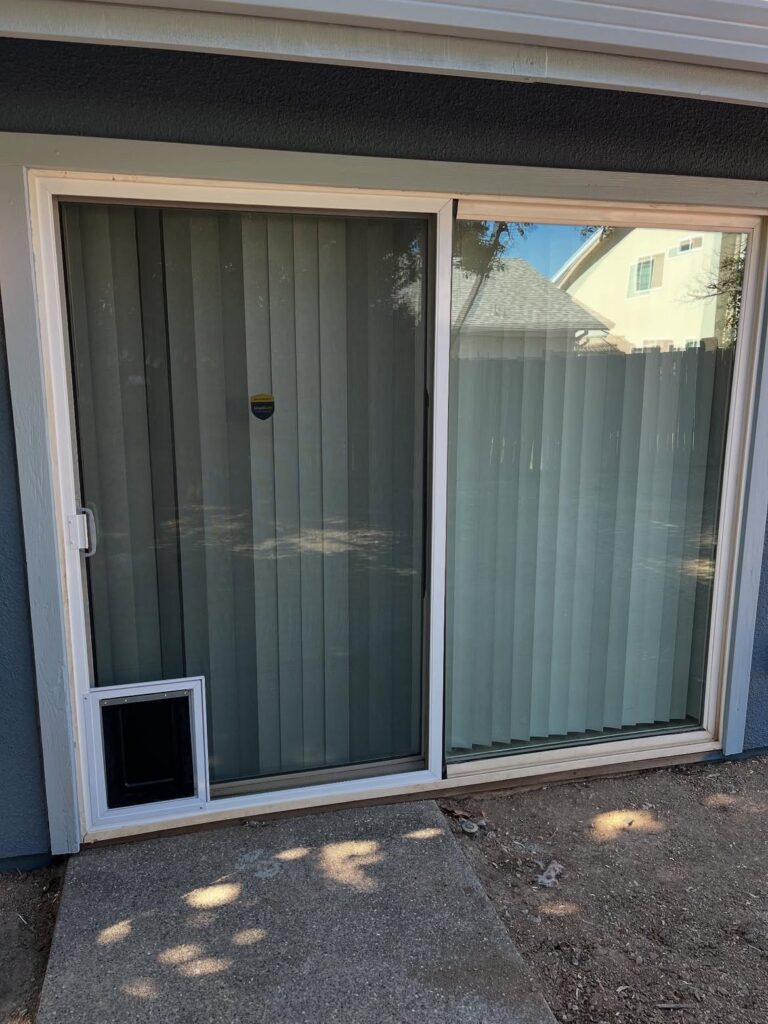
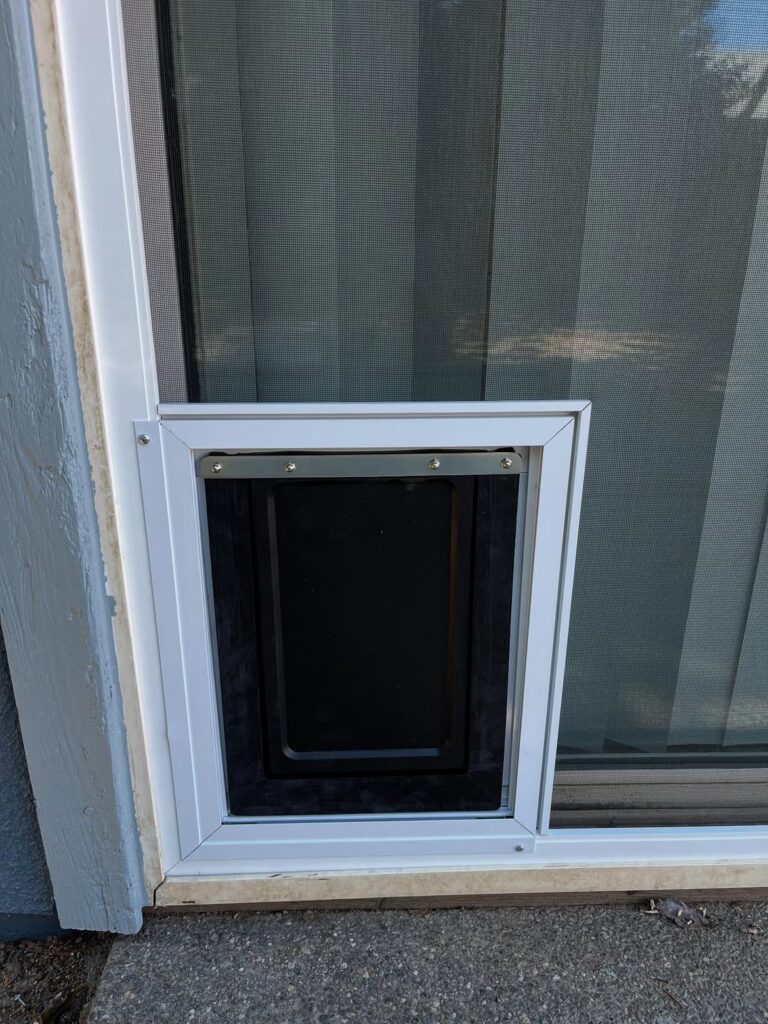
Pet doors built into the bottom panel of a security door are very popular, and we install a lot of them. Two tips:
- Size it for your pet, not bigger. Every extra inch is an extra inch of opening.
- Keep it well away from the lock. A pet door close to the handle can let someone reach in and work the thumb turn.
A lockable flap is worth it for nights and trips.
7. Fit, swing and the Sacramento sun
- Make sure the security door clears your main door's handle and swings without hitting railings, plants or the porch light.
- A good bottom sweep and weatherstripping keep dust, leaves and bugs out of the gap.
- Ask about the finish. A durable powder coat holds up to our summer sun. Dark colors look great but get hot to the touch on a west facing porch.
Window screens too
Most of the homes we do security doors for also need a torn screen replaced or want sun screens on the west side. See do sun screens actually work in Sacramento.
Quick answers
Can you add a pet door to a security screen door?
Yes. We install security doors with built in pet doors. Size it for your pet and keep it away from the lock hardware.
Do security screen doors stop break-ins?
A well built, well mounted security door is a strong deterrent and slows someone down a lot. No door is a guarantee, but most burglars move on to an easier target.
Can you fit a security door to an odd size doorway?
Yes. We measure the opening and build the door to fit instead of forcing a standard size.
Should the lock be keyed on both sides?
We recommend a thumb turn inside so the door opens without a key in an emergency. California code requires main exit doors to open from inside without a key or special knowledge.